

Summary
Governance & Leadership
Chief
- Ronnie Augier
Councillors
- Dustin Augier
- Edward Isadore
- Willie Laurent
- Diane McDonald
- Tanya Mercredi-Pacquette
- Justin Yooya
Next Election
May 2027Term of Office
3 YearsGovernment Type
Custom Electoral System (Custom Code)Demographics
Membership (*ISC - As of July 2026)
- 2,326 total membership
- 1,219 (on-reserve)
- 1,107 (off-reserve)
Reserves
Reserve Land
hectares
36,812.00
acres
90,964.43
km²
368.12
Physical Location
Fond du Lac is located at the northeast end of Lake Athabasca, Saskatchewan.
Economic Strategy
The Fond Du Lac Denesųłiné First Nation pursues a forward-looking economic development strategy centered on community self-reliance, sustainable resource management, and long-term socio-economic prosperity in northern Saskatchewan. Situated in the Athabasca Basin, the Nation leverages its strategic geographic positioning to build sustainable capacity across key economic sectors, including clean energy development, mineral resource opportunities, commercial real estate, and municipal infrastructure construction. Through strategic regional partnerships, joint ventures, and direct commercial investments, the Nation enhances local employment, expands Indigenous entrepreneurship, and creates enduring revenue streams to support vital community infrastructure and public services. By balancing commercial growth with environmental stewardship and cultural preservation, Fond Du Lac Denesųłiné First Nation ensures that economic advancement generates lasting benefits for present and future generations of its membership.
Economic Development Administration

Commercial enterprises and for-profit business activities for the Nation are principally managed through Fond du Lac First Nation Development Limited Partnership and its general partner, Fond du Lac First Nation (2008) Development Corporation. Operating under a structured governance framework established by Chief and Council, this economic development structure serves as the primary commercial entity responsible for evaluating, managing, building, and operating the Nation’s business investments and venture enterprises. The organization oversees commercial initiatives across diverse sectors, including housing construction, infrastructure projects, and strategic portfolio investments, ensuring that commercial activities operate efficiently and independently while remaining accountable to the community. In addition to managing wholly owned enterprises, the corporate entity actively participates in multi-Nation economic partnerships, such as Waterfound Development Limited Partnership and Waterfound Development Corp., to aggregate regional capacity and capture larger commercial opportunities. Through disciplined financial management and target-driven venture development, Fond du Lac First Nation (2008) Development Corporation fulfills its mandate to advance economic autonomy, generate sustainable economic returns, and create durable commercial value for the Fond Du Lac Denesųłiné First Nation.
Enterprise Portfolio
Economic Development & Corporate Entities
Fond du Lac First Nation (2008) Development Corporation (Wholly-Owned Government Business Enterprise)
Serves as the primary corporate general partner dedicated to overseeing commercial enterprise management and economic growth. The entity provides governance, strategic direction, and operational administration for the Nation’s for-profit commercial activities.
Fond du Lac First Nation Development Limited Partnership (Controlling Limited Partnership)
Engages in commercial contracting, infrastructure construction, and venture investment on behalf of the community to generate commercial revenues and support local economic development.
Fond du Lac Mineral Resources Inc. (Fully Consolidated Corporate Entity)
Explores, manages, and participates in mineral resource opportunities within the Nation’s traditional territory, positioning the community for strategic participation in the regional mining sector.
Fond du Lac Power Corporation (Fully Consolidated Corporate Entity)
Advances long-term clean energy development goals through energy generation and power infrastructure initiatives aimed at enhancing regional energy reliability and sustainability.
Fond du Lac Hydro Inc. (Consolidated Corporate Entity)
Focuses on hydro-electric energy exploration and potential power generation projects, serving as a vehicle to evaluate and pursue renewable energy ventures in the Athabasca region.
Investments & Commercial Partnerships

Waterfound Development Corporation (Joint Ownership Interest)
Serves as the general partner for shared regional commercial investments alongside partner First Nations, providing co-governance and operational oversight for joint ventures.
Prince Albert Development Corporation (Equity Ownership Interest)
Provides commercial management and economic investment services across a broad multi-Nation corporate network, enabling access to commercial returns and expanded business markets.

Prince Albert First Nation Business Development Limited Partnership (Equity Interest)
Engages in regional business investments and commercial ventures across diverse industry sectors to drive joint commercial participation and distributions.

CanAlaska Uranium Ltd. (Portfolio Equity Investment)
Focuses on identifying and developing high-grade uranium deposits within the Athabasca Basin, aligning local economic interests with regional mineral development.
Website:
canalaska.com
Regional Organizations & Economic Initiatives

Athabasca Basin Development (Economic Membership Interest)
Coordinates regional planning and economic development to maximize economic capacity, training opportunities, and business competitiveness across participating Nations and municipal partners.
Ya’ thi Néné Lands and Resources (Member Nation)
Protects the land and water resources of the Athabasca Basin while supporting sustainable economic development, environmental stewardship, and long-term socio-economic benefits from northern resource projects.
Athabasca Denesuline Ne Ne Land Corporation (Member Nation)
Conducts land claim negotiations and protects territorial interests north of the 60th parallel on behalf of member Denesųłiné Nations to secure recognized land rights and long-term economic opportunities.

Athabasca Denesuline Education Authority (Active Governance Membership)
Delivers comprehensive Pre-Kindergarten to Grade 12 educational services and cultural programming across member Denesųłiné communities to strengthen educational outcomes and local workforce readiness.
Athabasca Health Authority (Active Institutional Member)
Delivers integrated healthcare and wellness services across member First Nations and northern municipalities to foster healthy community conditions vital for sustained economic growth.
Yuthe Dene Sekwi Chu L A Koe Betsedi Inc. (Economic Membership Interest)
Provides child and family protection and prevention services tailored to reserve communities, ensuring culturally appropriate family services and community safety.
Access & Logistics Details
Primary Access:
Fond Du Lac Denesųłiné First Nation has no year-round all-weather road access. Ground transport is strictly limited to the seasonal Athabasca Winter Road network, which typically opens from late January through March depending on ice thickness. The winter road connects Fond-du-Lac east toward Stony Rapids and south via Highway 905 near Points North Landing.
Nearest Airport:
Primary year-round access is via Fond-du-Lac Airport (IATA: ZFD, ICAO: CZFD), which features a 3,810-foot (1,161-meter) gravel runway (Runway 10/28). Scheduled passenger and light-to-medium air freight services are provided by regional carriers such as Rise Air from Saskatoon and Prince Albert. Docking facilities on Lake Athabasca support floatplane operations during the ice-free season.
Nearest Commercial & Service Hub:
Prince Albert, SK (approximately 800 km south) is the primary regional logistics and freight staging hub. Saskatoon, SK (approximately 950 km south) functions as the nearest Tier-1 commercial center for major procurement and specialized contracting. Stony Rapids, SK (approximately 75 km east) serves as a local sub-regional administrative and service point.
Marine & Rail:
No rail lines or deep-sea ports exist. Seasonal inland marine barge service operates on Lake Athabasca during ice-free months (typically June through October), providing transport for heavy equipment, bulk construction materials, and fuel from supply points such as Stony Rapids or Fort McMurray.
Geographic & Logistical Notes:
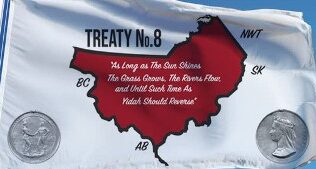
Located within Treaty 8 territory in the northern Athabasca Basin. Due to extreme northern isolation, project planning requires strict advance mobilization; heavy machinery and bulk freight must be delivered during the short winter road window or summer barge season. Contractors must engage in direct consultation with the First Nation leadership, obtain necessary land-use and access permits, and prepare equipment for subarctic conditions where temperatures routinely drop below -40°C.